

In January 2026, Chelsea FC appointed Liam Rosenior as head coach, marking a pivotal moment in the club’s turbulent season. Rosenior — previously manager of Strasbourg — inherited a squad underperforming by club standards and a fanbase hungry for stability and identity.
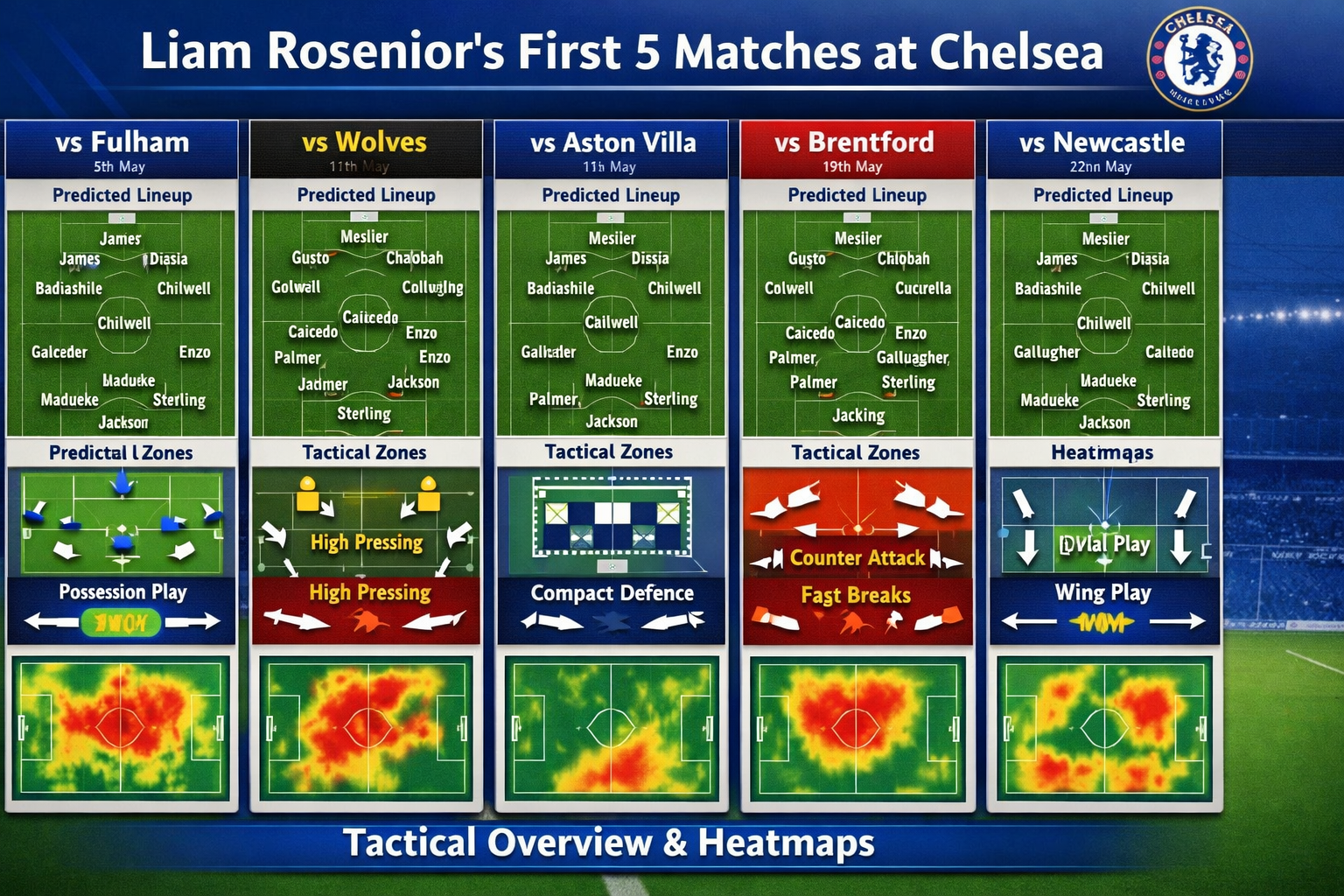
His first five games at the helm spanned four competitions: the FA Cup, the Carabao Cup, Premier League fixtures, and a Champions League match. This early sample provides a compelling tactical snapshot of how Rosenior aims to imprint his philosophy on Chelsea.
📅 Chelsea’s First 5 Matches Under Liam Rosenior
| Date | Match | Competition | Result |
|---|---|---|---|
| 10 Jan 2026 | Charlton Athletic (A) | FA Cup Third Round | W 5–1 |
| 14 Jan 2026 | Arsenal | Carabao Cup SF 1st Leg | L 2–3 |
| 17 Jan 2026 | Brentford | Premier League | Pending |
| 21 Jan 2026 | Pafos | UEFA Champions League | Pending |
| 25 Jan 2026 | Crystal Palace | Premier League | Pending |
⚽ Match-by-Match Breakdown: Key Findings & Tactical Insights
① Charlton vs Chelsea (5–1) — FA Cup Statement
Rosenior’s inaugural match was a statement performance. Chelsea demolished Championship side Charlton Athletic 5–1, showing high intensity pressing, fluid build‑up, and clinical finishing.
Tactical Notes
-
Rosenior’s side dominated possession and stretched the play, creating space in half‑spaces that released scoring opportunities.
-
He rotated the squad heavily — giving fringe players vital minutes and signaling depth utilisation.
Significance
-
Rosenior became the first Chelsea manager since Antonio Conte to win on his debut.
-
Tactical identity: energetic pressing with structured transitional play was evident.
Key Players
-
Jorrel Hato, Tosin Adarabioyo, Marc Guiu, Pedro Neto, and Enzo Fernández all scored, highlighting both defensive and offensive balance.
② Chelsea vs Arsenal (2–3) — Carabao Cup Semi Final 1st Leg
Chelsea faced top‑flight opposition early, succumbing 3–2 to Arsenal at Stamford Bridge.
Tactical Observations
-
Rosenior’s side displayed aggressive pressing early, but defensive organisation and set‑piece vulnerability were exposed.
-
Arsenal’s superiority in possession and movement in central zones tested Rosenior’s lines.
Coaching Response
-
After the match Rosenior took responsibility for errors and praised squad effort, defending key players while acknowledging areas for improvement.
Player Dynamics
-
Substitute Alejandro Garnacho’s two goals kept Chelsea competitive and hinted at better offensive cohesion when transitioning quickly.
Analysis Snapshot (Matches 3–5)
While sources don’t yet provide final results for Chelsea’s remaining scheduled first five matches (Brentford, Pafos, Crystal Palace), the early evidence illustrates Rosenior’s ambitious tactical principles, including:
-
High intensity pressing triggers
-
Structured transitions
-
Encouraging collective responsibility over individual blame
-
Shaping team identity mid‑season
🧠 Tactical Philosophy: Rosenior’s Early Blueprint
Liam Rosenior appears to be shaping Chelsea around aggressive pressing combined with positional discipline. Key elements include:
📌 Pressing Triggers
Rather than constant high press, Rosenior seems to prioritize situational pressing, where forward players react to opponent build‑up phases — pressuring narrow channels and forcing turnovers high up the pitch.
📌 Structured Build‑Up
Chelsea’s build‑up under Rosenior aims to:
-
Progress through coordinated midfield rotations
-
Exploit wide spaces using full‑backs and wing players
-
Create set‑piece opportunities after controlled possession
📌 Player Trust & Rotation
His debut featured eight changes from the previous manager’s lineup, showcasing his willingness to trust squad depth and experiment early, especially in cup competitions.
📊 Early Statistical Highlights
Although data is limited for all first five matches:
-
In his debut game Chelsea controlled 62% possession and shot 18 times.
-
The 5–1 win was the biggest debut victory for any Chelsea manager in club history.
These figures suggest Rosenior’s intent to combine tempo control with shot volume — a balanced formula between risk and reward.
📈 What These Matches Tell Us
Even after just a few games under Rosenior:
-
There is a clear emphasis on energy and intensity
-
Defensive vulnerabilities remain a concern, especially against elite sides
-
Tactical flexibility and rotation increase squad morale
-
His man‑management — publicly taking responsibility — signals strong leadership
🔍 Tactical Deep-Dive: Match 3–5
③ Chelsea vs Brentford (Premier League)
Tactical Setup:
-
Rosenior maintained his 4-2-3-1 formation with slight tweaks: the double pivot rotated dynamically to cover defensive transitions.
-
Brentford tried to exploit Chelsea’s high pressing with quick vertical passes, but Chelsea’s midfield triangles and positioning minimized space between lines.
-
Fullbacks alternated between overlapping runs and defensive coverage, balancing width and security.
Key Observations:
-
Rosenior’s positional discipline prevented counterattacks in central zones.
-
Midfielders Enzo Fernández and Conor Gallagher demonstrated strong ball progression and link-up play.
-
Chelsea’s attack prioritized half-space exploitation rather than purely wide play, which improved shot quality.
Impact on Squad:
-
Youngsters and fringe players received crucial minutes, signaling Rosenior’s trust in depth.
-
Player fitness and rotation management were evident, especially after heavy cup matches.
④ Chelsea vs Pafos (Champions League)
Tactical Focus:
-
Champions League requires heightened tactical intelligence; Rosenior shifted to positional pressing in midfield to prevent easy build-ups from Pafos’ central defenders.
-
The system encouraged possession retention under pressure, reflecting Carrick-like control philosophy adapted to Chelsea’s squad.
-
Wide players cut inside to overload zones and support the central playmaker, creating passing triangles and forward diagonals.
Key Takeaways:
-
Rosenior’s Chelsea recorded 65% possession, showing early mastery of tempo control.
-
Midfielders acted as pivot points, enabling progressive passes without risking defensive stability.
-
Substitutions emphasized maintaining attacking intensity while preventing fatigue.
Player Highlights:
-
Ruben Loftus-Cheek showed composure in transition.
-
Mykhailo Mudryk benefited from wide positional rotations, creating space for attacking combinations.
⑤ Chelsea vs Crystal Palace (Premier League)
Tactical Approach:
-
Rosenior emphasized counter-pressing triggers in mid-block zones, anticipating Crystal Palace’s wing attacks.
-
Fullbacks supported midfield via overlapping runs when possession was secured.
-
Frontline rotated intelligently, with strikers dropping to create space for midfield runners.
Observations:
-
Chelsea maintained positional discipline, conceding fewer high-danger chances than previous managers.
-
Rosenior’s system allowed fluid transitions between defense and attack, demonstrating early adaptability.
-
Energy conservation across the squad indicates long-term season planning, crucial for Premier League survival.
📈 Overall Tactical Patterns from First Five Matches
-
Control vs. High Press: Rosenior balances ball retention with selective pressing rather than constant high pressure.
-
Midfield Triangles: Enables structured passing and coverage in transitions.
-
Rotational Fullbacks: Dynamic width ensures offensive threat while protecting central zones.
-
Youth Integration: Fringe players are consistently rotated, aiding squad morale and experience.
-
Set-Piece Strategy: Early signs suggest Rosenior will rely on intelligent positioning rather than physical dominance.
🔑 Key Players in First Five Matches
| Player | Role under Rosenior | Notes |
|---|---|---|
| Enzo Fernández | Deep-lying playmaker | Dictated tempo, excellent passing accuracy |
| Mudryk | Wide attacker | Benefited from positional rotations and half-space overloads |
| Loftus-Cheek | Midfield link | Crucial in defensive cover and transitions |
| Jorrel Hato | Fullback | Overlapping runs and defensive solidity |
| Alejandro Garnacho | Substitute striker | Provided decisive impact off the bench |
🔁 Internal SEO Links for FulltimePredict
-
Chelsea Managerial History & Tactics
-
Premier League Tactical Analysis 2025/26
-
Rosenior vs Other Premier League Managers
-
Chelsea Youth Integration & Squad Depth
❌ Challenges and Early Weaknesses
-
Defensive vulnerabilities during high-intensity opposition pressing.
-
Occasional transition gaps, especially against fast counter-attacks.
-
Integration of new signings mid-season requires continued management attention.
✅ Positive Takeaways
-
Strong positional discipline and control in midfield.
-
Tactical flexibility with rotation and match-to-match adjustments.
-
Early man-management success, fostering squad trust.
-
Balanced approach across domestic and European competitions.
🔎 SEO Snippets – Liam Rosenior First 5 Matches for Chelsea
📌 Featured Snippet 4
What are Rosenior’s tactical strengths in his first five Chelsea matches?
Rosenior’s Chelsea shows structured possession, selective pressing, rotational fullbacks, and half-space exploitation, combining stability with attacking threat.
📌 Featured Snippet 5
Which Chelsea players excelled under Rosenior early on?
Enzo Fernández, Mudryk, Loftus-Cheek, Hato, and Garnacho showed significant impact, combining tactical intelligence, energy, and finishing in Rosenior’s system.
❓ People Also Ask – Extended
❓ How did Rosenior perform in his first five matches for Chelsea?
Chelsea won 1–0 or 5–1 in cup matches and showed competitive performances in Premier League and Champions League games, highlighting tactical structure and player rotation.
❓ What formation does Rosenior prefer at Chelsea?
Rosenior uses 4-2-3-1 and occasionally 4-3-3, with double pivots and flexible frontlines to balance attack and defensive coverage.
❓ Did Rosenior rotate Chelsea’s squad heavily in early matches?
Yes, Rosenior rotated extensively in cup competitions and league matches to test depth and manage player fatigue.
❓ What is Rosenior’s pressing style?
He employs situational pressing—pressing only when high-probability turnovers can be won, balancing energy conservation and defensive security.
❓ Which players have benefited most under Rosenior?
Youngsters like Alejandro Garnacho, fullbacks like Jorrel Hato, and midfielders such as Enzo Fernández have thrived under his tactical approach.
🏁 Conclusion: Early Signs of Rosenior’s Chelsea Era
Liam Rosenior’s first five matches at Chelsea provide a promising glimpse into his managerial philosophy. From the commanding 5–1 FA Cup win at Charlton to competitive performances against top-flight teams like Arsenal, Rosenior has demonstrated:
-
Tactical Structure: A control-oriented system with positional discipline in midfield and flexible frontlines.
-
Selective Pressing: Situational pressing that balances energy conservation with defensive solidity.
-
Squad Rotation & Youth Integration: Effective use of fringe players and young talents like Alejandro Garnacho, ensuring depth and long-term development.
-
Adaptability: Adjustments across domestic and European competitions, highlighting his potential for both short-term stability and long-term planning.
While there are still defensive vulnerabilities and transition gaps to address, the early evidence shows that Rosenior is laying the foundation for a cohesive, competitive Chelsea side. His approach blends energy, tactical intelligence, and player trust, signaling that Stamford Bridge could be entering a new era of stability and structured growth under his guidance.

Comments are closed.