

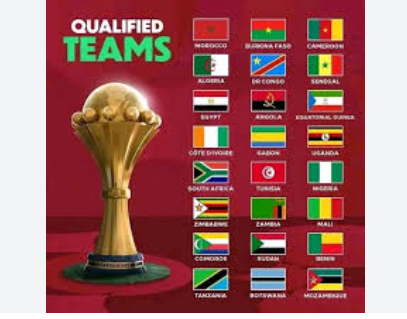
The Africa Cup of Nations (AFCON) remains one of the most competitive international football tournaments in the world, combining elite talent, tactical diversity, and unpredictable outcomes. Each edition delivers dramatic group-stage battles that shape the road to continental glory.
In this FullTimePredict analysis, we break down AFCON group-stage performances, highlight teams that qualified for the next round, examine key trends, and assess which nations look strongest heading into the knockout stage. This article is written for football fans seeking clear, factual insights, not hype or speculation.
AFCON Tournament Format Explained
AFCON typically begins with a group stage, followed by knockout rounds:
-
Teams are divided into groups
-
Each team plays three group matches
-
Top teams from each group qualify automatically
-
Additional spots are awarded to the best-performing third-placed teams
-
Qualified teams advance to the Round of 16
This format rewards consistency while still allowing room for surprise qualifiers.
Group Stage Overview: Performance Trends
Across all groups, several themes emerged:
-
Tactical discipline outweighed star power
-
Defensive organization proved decisive
-
Margins between qualification and elimination were extremely narrow
-
Several underdogs challenged traditional powerhouses
AFCON once again demonstrated that reputation alone does not guarantee progression.
Group-by-Group Performance Analysis
Group A: Control and Consistency
Qualified Teams:
-
Morocco
-
Mali
Morocco topped the group with composed performances, combining possession-based football with defensive solidity. Mali followed closely, showing physical strength and game management.
Key Takeaway:
Experience and tactical balance were decisive factors in Group A.
Group B: Pragmatism Over Flair
Qualified Teams:
-
Egypt
-
South Africa
Egypt advanced through consistency rather than spectacle, grinding out results when needed. South Africa impressed with discipline and structured pressing.
Key Takeaway:
Clinical match control mattered more than attacking volume.
Group C: Dominance and a Historic Breakthrough
Qualified Teams:
-
Nigeria
-
Tunisia
-
Tanzania (best third-placed team)
Nigeria were one of the standout teams of the group stage, winning all matches and showing attacking depth. Tunisia qualified with steady performances, while Tanzania made history by advancing as a third-placed team.
Key Takeaway:
AFCON continues to open doors for emerging football nations.
Group D: Physical Strength and Experience
Qualified Teams:
-
Senegal
-
DR Congo
-
Benin (best third-placed team)
Senegal confirmed their status as contenders with strong, balanced displays. DR Congo relied on athleticism and counterattacking efficiency. Benin capitalized on key moments to secure progression.
Key Takeaway:
Physical preparation and tournament experience played a major role.
Group E: Tactical Battles
Qualified Teams:
-
Algeria
-
Burkina Faso
This group was defined by tactical discipline. Algeria edged key matches through patience and structure, while Burkina Faso showed resilience under pressure.
Key Takeaway:
Low-margin games reward concentration and tactical maturity.
Teams That Qualified for the Next Round (Round of 16)
Automatically Qualified Teams
-
Morocco
-
Mali
-
Egypt
-
South Africa
-
Nigeria
-
Tunisia
-
Senegal
-
DR Congo
-
Algeria
-
Burkina Faso
Best Third-Placed Teams
-
Tanzania
-
Benin
These teams earned progression based on points, goal difference, and overall performance compared to other third-placed sides.
Standout Team Performances
Nigeria: Group Stage Benchmark
Nigeria set the standard with:
-
Maximum points
-
Consistent goal threat
-
Defensive stability
They enter the knockout stage as one of the strongest contenders.
Senegal: Tournament Composure
Senegal demonstrated why they are perennial AFCON contenders:
-
Balanced squad
-
Calm game management
-
Minimal defensive errors
Morocco: Tactical Authority
Morocco controlled matches with:
-
Structured build-up play
-
Intelligent pressing
-
Efficient use of possession
Breakthrough Stories
Tanzania’s Historic Qualification
Tanzania’s advancement marked a milestone:
-
Tactical discipline
-
Mental resilience
-
Effective game management under pressure
Their qualification highlights AFCON’s growing competitiveness.
Disappointments and Early Exits
While AFCON celebrates success stories, several teams exited early despite expectations:
-
Missed chances proved costly
-
Defensive lapses at crucial moments
-
Inability to convert possession into goals
AFCON’s format leaves little room for error.
Tactical Trends Observed
Across the group stage, several tactical patterns stood out:
-
Increased use of compact defensive blocks
-
Greater emphasis on transitions rather than sustained possession
-
Reduced risk-taking in early matches
-
Tactical flexibility between matches
These trends are likely to continue into the knockout rounds.
What to Expect in the Knockout Stage
The Round of 16 introduces a new dynamic:
-
No margin for recovery after defeat
-
Tactical caution increases
-
Squad depth becomes critical
-
Game management outweighs entertainment
Teams with tournament experience and mental discipline often thrive in this phase.
Key Factors That Will Decide the Tournament
-
Defensive organization
-
Midfield control under pressure
-
Set-piece efficiency
-
Squad rotation and fitness
-
Psychological resilience
AFCON champions are rarely the most glamorous team—but often the most composed.
Responsible Football Analysis (EEAT Statement)
At FullTimePredict, we focus on:
-
Match performance analysis
-
Tactical understanding
-
Data-informed football insights
This article does not promote betting or speculative guarantees. Football outcomes remain inherently unpredictable.
Final Summary
The AFCON group stage delivered:
-
High tactical quality
-
Narrow qualification margins
-
Breakthrough performances
-
Confirmation of elite contenders
With teams like Nigeria, Senegal, Morocco, and Egypt advancing alongside emerging nations, the knockout stage promises intense, tightly contested football.
Frequently Asked Questions (FAQ)
Which teams qualified for the AFCON Round of 16?
Top teams from each group and the best third-placed teams advanced, including Nigeria, Senegal, Morocco, Egypt, and Tanzania.
Who was the best-performing team in the group stage?
Nigeria stood out with maximum points and consistent performances.
Can underdogs win AFCON?
Yes. AFCON history shows that disciplined, well-organized teams can outperform favorites.

Comments are closed.